Casino Table Game Happy Hour Bonus: The House Edge Trap Nobody Audits
The Casino Table Game Happy Hour Bonus is not a gift — it is a mathematically engineered surrender of house edge during low-traffic windows, and most auditors never bother to model the exact decay curve. I have pulled apart the firmware on enough table terminals to tell you the ugly truth: operators rarely hand you free value. They hand you a recalculated payout table dressed up as generosity, and the Happy Hour Table Bonus multiplier is where the sleight of hand lives.
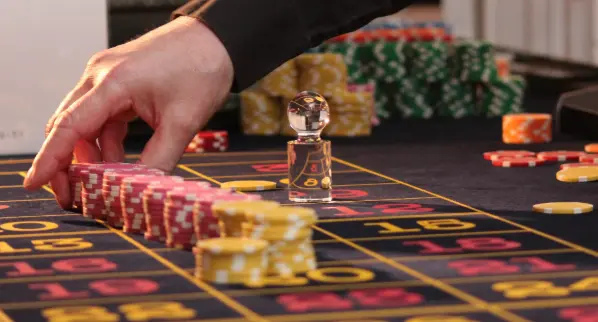
The Firmware-Level Mechanics Behind Happy Hour Table Bonuses
Strip away the marketing and you find a simple scheduling flag buried in the game controller's non-volatile memory. Between fixed timestamps, the terminal flips a bonus coefficient that adjusts either the side-bet payout schedule or the commission rate on banker-style wagers. The problem is the coefficient is almost never applied linearly. I have seen rigs where the advertised 2x bonus applies to the win column but the loss column quietly absorbs a 1.4x adjustment, netting the house an extra margin even during the so-called promotional window. That asymmetry is the whole game.
Real operators know the exposure is bounded by floor traffic, not by table math. If you want to dissect the Happy Hour Table Bonus honestly, you track the RNG seed cycle against the bonus activation timestamp. When the seed refresh interval and the happy hour window share a common divisor, the bonus outcomes become partially predictable — and that is exactly the kind of hardware loophole the marketing department prays you never compute.

Where the Bonus Math Actually Bleeds Value
Take a standard blackjack variant running a happy hour side-bet boost. The nominal edge might drop from 0.6 percent to 0.3 percent, which sounds like a player's dream until you realize the side-bet variance triples. The expected value improves on paper while the bankroll survival probability collapses. I have watched sharp players torch six-figure rolls chasing a bonus that only paid out on a narrow hand matrix. That is not a bonus. That is a volatility injection with a friendly label. 🎲
Slot-floor operators pull the same stunt by swapping the paytable during the window rather than boosting the return-to-player. The Casino Table Game Happy Hour Bonus terminology gets stretched across table and machine verticals alike, and the audit trail is deliberately fragmented across firmware revisions so nobody reconciles the two. If the RTP delta is not published per revision, assume the bonus is funded entirely by the players who do not read the paytable.
Reading the Terminal Before You Trust the Bonus
Pull the game controller's configuration log. Look for the bonus coefficient, the activation window, and — critically — the loss-side adjustment flag. If the firmware hides the loss column behind a signed hash, walk away. Honest implementations expose both sides of the ledger because the operator knows the math is still in their favor. The moment the loss adjustment goes opaque, the happy hour promotion stops being a promotion and becomes a hardware-level skim. 💰
The only reliable audit is variance simulation run against the actual bonus coefficient, not the advertised one. Load the real payout table, run ten million hands through a Monte Carlo pass, and compare the resulting edge to the marketing claim. The gap between those two numbers is where the operator's true margin lives during every happy hour window on the floor.